






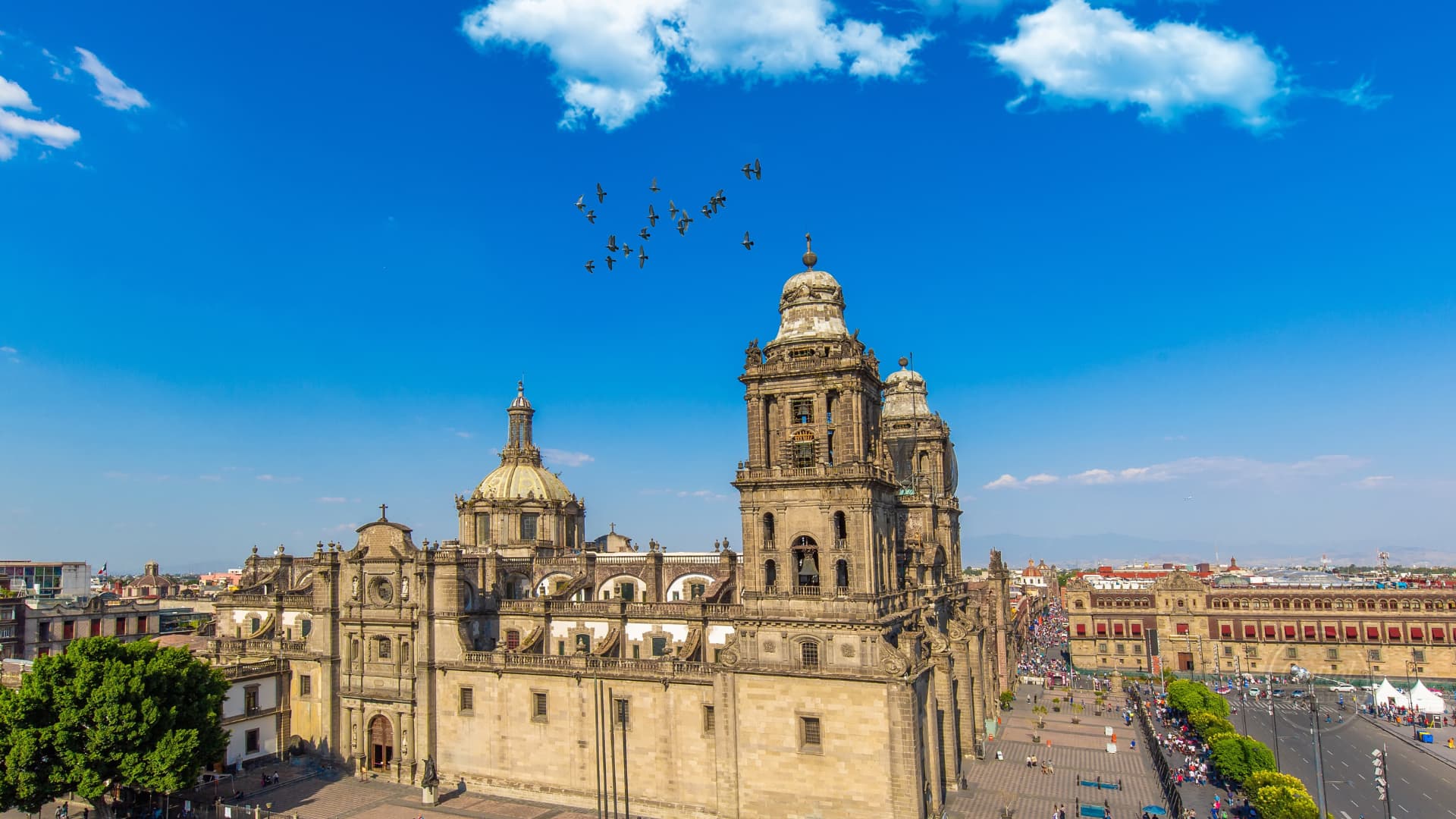

Mexico City’s Historic Center has something unique: as you walk through it, you’re moving across different time periods all at once. Beneath your feet once stood Mexica temples; above them rose colonial churches, followed by 19th-century palaces and later 20th-century buildings. All of it coexists within just a few blocks.
Exploring this area changes completely once you understand what you’re looking at. The history and architecture of the Historic Center aren’t confined to museums—they’re in the façades, courtyards, and details that often go unnoticed.
Simply looking up and recognizing styles, materials, and time periods gives your walk a deeper meaning. And if you stay in the area, in a hotel like Histórico Central, history stops being something you visit during the day and becomes part of your everyday surroundings.
How to Read the Architecture as You Walk
Walking through the Historic Center can feel overwhelming the first time. There’s just so much to take in. But once you know where to look, everything starts to make sense.
Start by looking up. Wrought-iron balconies, moldings, and cornices often reveal the building’s era. Colonial façades tend to be more restrained, with stone finishes and symmetrical proportions, while 19th- and early 20th-century buildings feature more ornamentation.
Next, pay attention to the doors. Many still preserve original wood, old nails, or family crests. Some of these buildings were once grand residences before becoming museums, offices, or restaurants.
If you come across an open courtyard, step inside. In the Historic Center, inner patios are just as important as façades. They’re a direct legacy of colonial architecture and offer insight into how people lived in past centuries.
A practical tip: explore early in the morning, between 8 and 10 a.m. The light highlights architectural details beautifully, and there are fewer crowds, making it easier to take everything in.
7 Buildings That Tell the Story of the Historic Center
If you want to understand the architectural evolution of the Historic Center in a single walk, these seven buildings create a kind of timeline.
1. Metropolitan Cathedral
It’s impossible to miss. Construction began in the 16th century and took over 200 years to complete, which is why it blends multiple styles. Walk around it entirely to see how its façade changes depending on the angle.
Tip: Step inside and walk to the Altar of Forgiveness—it’s a key point for understanding sacred art and the cathedral’s history. Visiting on a weekday morning helps you avoid crowds.
2. Templo Mayor
Behind the Cathedral lie the ruins of the ancient sacred precinct of Mexico-Tenochtitlan. It was the center of Mexica religious life and one of the most important ceremonial complexes of its time.
Give it at least an hour. The museum helps you understand how today’s city was literally built on top of this foundation.
3. National Palace
Built on the site of Moctezuma’s palace, its red tezontle façade is one of the clearest examples of colonial architecture in the Historic Center.
It’s the seat of the executive branch, but also home to some of Diego Rivera’s most impressive murals. The inner courtyards are an essential part of the visit.
Tip: Bring an official ID, as it’s usually required for entry.
4. Antiguo Colegio de San Ildefonso
This is one of the places where the Mexican muralist movement began. Artists like Diego Rivera and José Clemente Orozco painted here, shaping the future of public art in Mexico.
Its courtyards and staircases preserve the original colonial architecture, creating a clear connection between history, art, and space.
5. National Art Museum (MUNAL)
Architecturally, one of the most striking buildings in the area. It’s a great example of eclectic architecture with neoclassical influence, and its interior is just as impressive as its façade.
Even if you don’t visit every gallery, step into the lobby and walk up the main staircase—it’s one of the most elegant spaces in the Historic Center.
6. Postal Palace
Located almost directly across from MUNAL, the Postal Palace is one of the most representative buildings of Porfirian-era architecture. It blends neo-Gothic and Renaissance influences with intricate ornamentation that reflects European tastes of the time.
Even a quick five-minute visit is worth it—and entry is free.
7. Palace of Fine Arts
The country’s main cultural venue and one of the architectural jewels of the Historic Center. Its white marble façade, in Art Nouveau style, contrasts with its Art Deco interior, visible in its lamps, marble finishes, and geometric details.
It also houses murals by Diego Rivera, David Alfaro Siqueiros, Rufino Tamayo, and José Clemente Orozco, helping illustrate the relationship between art and architecture in 20th-century Mexico.

Lesser-Known Buildings That Also Tell the Story
Beyond the iconic landmarks, the Historic Center is filled with architectural gems on nearly every street.
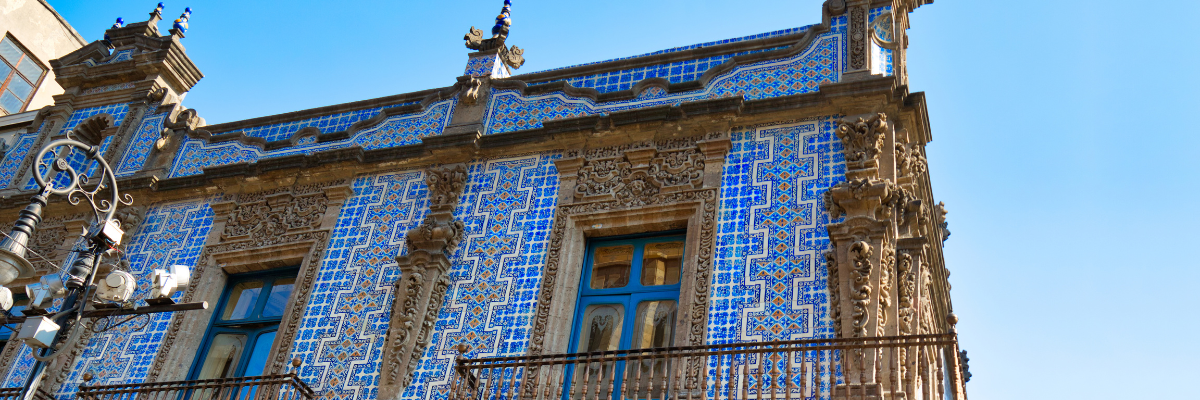
Casa de los Azulejos stands out for its façade covered in Talavera tiles.
The Palace of Mining is a key example of neoclassical architecture—if there’s an exhibition or book fair, it’s worth stepping inside.
La Profesa Church features one of the most interesting Baroque interiors in the area.
Exconvento de Regina Coelli, slightly south of the main tourist zone, offers a quieter atmosphere and architecture that reflects the area’s convent past.
These places broaden your understanding of the Historic Center beyond the most photographed spots.
A Half-Day Walking Route from Histórico Central
Staying in a hotel in Mexico City’s Historic Center completely changes how you explore. From Histórico Central, you can follow a rich historical and architectural route without needing transportation.
Suggested half-day route:
Head out along 5 de Mayo Street
Arrive at the Zócalo and explore the Cathedral and Templo Mayor
Continue to the National Palace
Walk to San Ildefonso and explore its courtyards and murals
Head toward MUNAL and the Postal Palace
Continue on to the Palace of Fine Arts
Return via the pedestrian Madero Street
Along the way, you’ll find cafés, terraces, and places to pause. The advantage of staying here is that you can return to your hotel, rest, and head out again later.
Histórico Central is part of this urban fabric. Its restored building preserves the architectural essence of the area and places you right within this historic setting.
Practical Tips for Exploring Architecture in the Historic Center
To make the most of your visit:
Visit museums between Tuesday and Thursday to avoid crowds
Check for temporary exhibitions before entering
Walk in the morning for the best light for photography
Wear comfortable shoes—the area is best explored on foot
Plan at least two full days if you want to explore historic buildings in depth
The history and architecture of the Historic Center can’t be fully experienced in just one visit—there’s always something new to discover.
Staying at Histórico Central Means Becoming Part of the Story
When you choose a hotel in the Historic Center, your experience shifts. You’re not just visiting landmarks during the day—you’re staying within the very environment that surrounds them.
Histórico Central offers a prime location and a restored building that respects the area’s original architecture. From here, you can walk to the most important historic sites, return whenever you need, and continue exploring later.
At night, the atmosphere changes. Façades light up, the streets become quieter, and the pace slows down. Being able to walk back after dinner to a building with historical character creates a sense of continuity between what you experienced during the day and where you rest.
Understanding the history and architecture of the Historic Center changes the way you walk the city. Staying in the heart of it allows you to experience it on a deeper level.
Discover more about Histórico Central and book your stay today.