


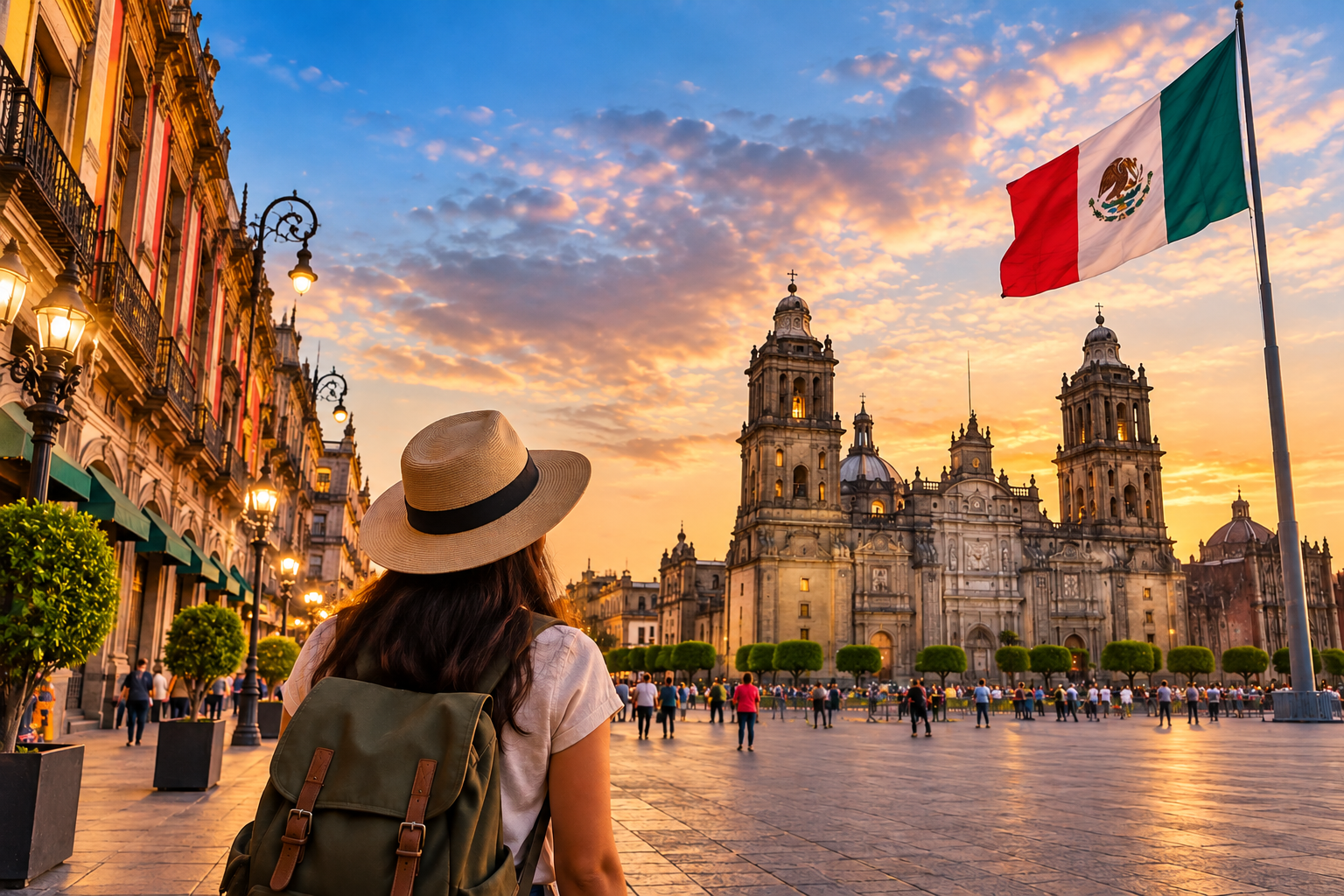

Yes, Mexico City's Historic Center can be a great place to stay, particularly if you're visiting for the first time and want to be close to the city's most famous landmarks. As with any major city, though, your experience will depend on where exactly you're staying, when you're out exploring, and the precautions you take along the way.
Choosing a well-located hotel, planning your routes, and knowing what to expect can make your visit considerably easier.
Staying in the Heart of Mexico City: What You Should Know Before Booking
Picture waking up just a few blocks from the Zócalo, stepping outside for coffee, and spending your morning wandering past centuries-old buildings, lively plazas, and beautiful architecture.
That's one of the biggest reasons travelers choose to stay in Mexico City's Historic Center, known locally as the Centro Histórico.
It's a neighborhood where history is part of everyday life. Ancient ruins stand alongside colonial buildings, traditional restaurants share streets with contemporary cafés, and some of the city's most important museums are within walking distance of one another.
But if you're planning your first trip to Mexico City, you probably have a few questions.
Is downtown Mexico City safe for tourists? Can you walk around at night? Is it better to stay near the Zócalo or somewhere closer to Bellas Artes?
They're all reasonable things to ask before booking a hotel.
The important thing to understand is that the Historic Center isn't one small, uniform neighborhood. It covers a large area with busy shopping streets, government buildings, cultural landmarks, residential blocks, and quieter corners.
And while some streets are bustling throughout the day, others can feel very different after businesses close.
Here's what to know before choosing where to stay.
How Safe Is Mexico City's Historic Center?
Mexico City's Historic Center is one of the capital's most visited areas, attracting both international travelers and local residents every day.
It's home to major attractions such as the Metropolitan Cathedral, the Templo Mayor archaeological site, the National Palace, and the Palacio de Bellas Artes.
You'll find plenty of activity around these landmarks during the day, along with public security services and tourist-oriented assistance in parts of the district.
That doesn't mean you should leave your usual travel precautions behind.
Like other busy urban destinations, the area can experience pickpocketing, phone theft, and other opportunistic crime, particularly in crowded places.
The most useful approach is to stay aware of your surroundings without allowing safety concerns to overshadow the experience.
Keep your valuables secure, avoid displaying expensive belongings unnecessarily, and pay attention when using public transportation or walking through busy shopping areas.
It's also worth remembering that a hotel's exact location matters more than simply being listed as "downtown Mexico City."
Staying close to well-known landmarks and established visitor routes can make sightseeing more convenient, especially if you're unfamiliar with the city.
Where Are the Best Areas to Stay in Mexico City's Historic Center?
Not every part of downtown Mexico City offers the same experience.
If you're choosing a hotel, these three areas are worth considering.
1. Near the Zócalo: Best for First-Time Visitors and History Lovers
The Zócalo, officially called Plaza de la Constitución, is Mexico City's main square and one of its most recognizable landmarks.
Staying nearby puts you close to the Metropolitan Cathedral, the Templo Mayor, and several of the city's most important historic buildings.
It's a particularly appealing location if you want to explore on foot and spend less time arranging transportation.
During the day, the surrounding streets are often busy with visitors, office workers, vendors, and people going about their daily routines.
The square also hosts major public events, cultural celebrations, and demonstrations, which can occasionally affect traffic and access to nearby streets.
Who is this area best for?
First-time visitors, couples, history enthusiasts, and travelers planning a short stay focused on sightseeing.
What should you keep in mind?
Check how to reach your hotel, particularly if you're arriving during a major event. Some streets may have temporary traffic restrictions, and vehicle access isn't always straightforward.
2. Around Madero Street: Best for Exploring on Foot
Francisco I. Madero is one of the Historic Center's best-known pedestrian streets.
It connects the Zócalo area with Eje Central, near the Palacio de Bellas Artes, and is lined with shops, restaurants, historic buildings, and architectural landmarks.
It's an excellent starting point for travelers who enjoy exploring cities on foot.
You can spend hours discovering churches, traditional businesses, cafés, and beautiful buildings without needing a car.
Because it's such a popular pedestrian corridor, the street can get crowded, particularly on weekends and during holiday periods.
As you would in any busy shopping district, keep your phone, wallet, and personal belongings secure.
Who is this area best for?
Couples, international visitors, architecture enthusiasts, and travelers who prefer walking between attractions.
What should you keep in mind?
The atmosphere changes once shops begin to close. Check the streets surrounding your hotel and plan your route back if you're returning late.
3. Near Alameda Central and Bellas Artes: Best for Culture and Transportation
The area around Alameda Central and the Palacio de Bellas Artes is another popular option for visitors exploring central Mexico City.
It's particularly convenient if your itinerary includes museums, cultural attractions, restaurants, and trips to other parts of the capital.
The area also offers access to public transportation, making it easier to explore beyond the Historic Center.
However, being close to Alameda Central isn't quite the same as staying near the Zócalo.
Depending on your hotel, you'll have different walking distances to the city's major landmarks.
Who is this area best for?
Travelers interested in museums, cultural experiences, and combining downtown sightseeing with visits to other neighborhoods.
What should you keep in mind?
Look beyond the hotel's general location and check the actual walking routes to attractions and transportation stations.
Is It Safe to Walk Around Mexico City's Historic Center at Night?
This is one of the most common questions travelers ask.
And the answer depends largely on where you're walking, what time it is, and how familiar you are with the area.
During the day, major streets around the Zócalo, Madero, and Bellas Artes can be very busy.
At night, however, the atmosphere changes.
Some streets remain active thanks to restaurants and other businesses, while others become noticeably quieter after stores close.
A route that feels perfectly comfortable in the afternoon may not be the best choice late at night.
If you're heading out for dinner or planning an evening activity, a few simple precautions can help:
Stick to well-lit streets with pedestrian activity.
Avoid unfamiliar shortcuts and deserted streets.
Plan your return before leaving your hotel.
Consider using a reputable ride-hailing service or arranged transportation for late-night trips.
Ask your hotel's front desk about practical routes and transportation options.
Keep your phone charged and make sure you have access to mobile data.
If you're unfamiliar with downtown Mexico City, there's no need to insist on walking everywhere after dark.
Sometimes, arranging a ride directly to your hotel is simply the more comfortable choice.
Is the Historic Center a Good Place to Stay on Your First Visit to Mexico City?
For many travelers, absolutely.
One of the biggest advantages of staying in the Historic Center is having so much of Mexico City's cultural heritage within a relatively small area.
You can start your morning at the Metropolitan Cathedral, visit the Templo Mayor, explore the surrounding streets, and spend the afternoon walking toward Bellas Artes.
Along the way, you'll come across traditional restaurants, shops, historic architecture, and everyday scenes that give downtown Mexico City its character.
For a two- or three-night visit, this concentration of attractions can be especially valuable.
Instead of spending a large part of your trip traveling between neighborhoods, you can focus on experiencing the city.
That said, first-time visitors should consider three things before booking.
Know Exactly Where Your Hotel Is
A property described as being in the Historic Center could be several blocks away from the places you want to visit.
Check the address on a map and look at the surrounding streets, not just the hotel's description.
Understand Your Transportation Options
Downtown Mexico City is connected to the rest of the capital through the Metro, Metrobús, and other transportation services.
Public transportation can be useful, but routes, schedules, and service conditions may change.
Check current information before traveling, particularly if you have reservations or time-sensitive plans.
Plan Your Sightseeing Around the Day
Exploring museums, monuments, and historic streets during daylight hours is often the easiest way to experience the area.
It also gives you more flexibility to enjoy the evening without having to navigate unfamiliar streets late at night.
What Should You Look for When Booking a Hotel in Downtown Mexico City?
Choosing the right hotel involves more than finding a room at a good price.
A convenient location and reliable information can make a real difference to your experience.
A Clear, Convenient Location
Check the hotel's exact address and look at how easily you can reach it.
Some streets in the Historic Center are pedestrian-only, while others may be affected by traffic restrictions or public events.
If you're arriving with luggage, knowing where your transportation can drop you off is especially helpful.
Front Desk Support
Find out whether the hotel offers reception services at the time you expect to arrive.
If your flight lands late, confirm the check-in arrangements in advance.
Having a reliable contact at the property can make your arrival much smoother.
Recent Guest Reviews
Reviews can provide useful insight into cleanliness, comfort, service, and the overall guest experience.
Look for recent comments that describe specific experiences rather than relying entirely on an overall rating.
Services That Fit Your Trip
Think about what matters most to you.
Do you need breakfast before heading out? A place to leave your luggage after checkout? An elevator? Help arranging transportation?
Not every traveler needs the same amenities, so focus on the services that will make your stay more comfortable.
Straightforward Booking Information
Before confirming your reservation, review the cancellation policy, check-in and checkout times, total price, and official contact information.
Booking directly with the hotel may also make it easier to ask questions about your arrival or communicate special requests.
Where to Stay in Mexico City's Historic Center: Three Central Hoteles Options
If you've decided that the Historic Center is the right place for your trip, Central Hoteles offers three properties in this part of Mexico City.
Each provides a different starting point for discovering the capital, depending on your plans and preferences.
Hotel Zócalo Central & Rooftop
For travelers who want to wake up close to Mexico City's most iconic square, Hotel Zócalo Central & Rooftop is worth considering.
Located facing the Zócalo, the hotel places guests near the Metropolitan Cathedral and several of the Historic Center's most important landmarks.
It's a particularly appealing choice for visitors who want to spend their days exploring the city's architecture, history, and cultural attractions.
The location also makes it convenient to plan walking routes through the surrounding historic streets.
Hotel Histórico Central
Hotel Histórico Central is another option for travelers who want to experience the atmosphere of downtown Mexico City.
Its location offers access to historic streets, cultural attractions, and commercial areas within the city center.
It may be a good fit for couples, international visitors, and travelers who enjoy spending their days discovering a destination on foot.
Hotel Canadá Central & Rooftop
Hotel Canadá Central & Rooftop offers another way to experience Mexico City's Historic Center.
The property provides a convenient base for visitors interested in exploring downtown attractions, traditional streets, shopping areas, and local dining experiences.
As with any hotel, it's worth comparing the exact location, room options, available services, and booking conditions before making a decision.
Travel tip: Whichever property you choose, contact the hotel ahead of your arrival if you have questions about late check-in, transportation, or the best way to reach the entrance.
Seven Practical Tips for Exploring Downtown Mexico City
Mexico City's Historic Center has its own rhythm.
Mornings bring commuters, shopkeepers, and early visitors. Afternoons are often busy with shopping and sightseeing. By evening, some streets become quieter as businesses close.
Understanding these changes can help you enjoy the neighborhood more comfortably.
1. Start Your Day Early
Visiting museums, churches, and historic landmarks in the morning can help you make the most of your itinerary before the busiest periods.
2. Carry Only What You Need
Bring the essentials for your day out and leave unnecessary valuables securely stored at your accommodation.
3. Be Mindful in Crowded Areas
Busy pedestrian streets, public transportation stations, and popular attractions are places where it's worth keeping a closer eye on your belongings.
4. Use Familiar Landmarks to Navigate
The Zócalo, Metropolitan Cathedral, and Palacio de Bellas Artes are useful reference points.
Still, use updated maps to confirm walking routes and travel times.
5. Ask Your Hotel for Local Advice
Hotel staff can help you understand transportation options and suggest practical ways to reach attractions.
6. Check for Major Events
Public celebrations, demonstrations, and cultural events can temporarily affect access to parts of the Historic Center.
If you have a scheduled tour, flight, or reservation, check current conditions before leaving.
7. Save Important Contact Information
Mexico's general emergency number is 911.
It's also a good idea to save your hotel's contact details and share your travel plans with someone you trust.
Should You Stay in the Historic Center or Another Mexico City Neighborhood?
That depends on what you want to experience.
If your itinerary revolves around the Zócalo, Metropolitan Cathedral, Templo Mayor, Bellas Artes, and the city's historic architecture, staying downtown can save you considerable travel time.
On the other hand, if you plan to spend most of your trip exploring neighborhoods such as Roma, Condesa, or Polanco, you might prefer accommodation closer to those areas.
You can also use the Historic Center as your home base and explore other neighborhoods by public transportation or car.
The best choice isn't necessarily the city's most talked-about neighborhood.
It's the one that makes sense for your actual travel plans.
Frequently Asked Questions About Staying in Mexico City's Historic Center
Is it safe to stay near the Zócalo in Mexico City?
Staying near the Zócalo can be convenient for tourists who want easy access to major landmarks. As in any busy urban area, it's important to watch your belongings, plan your routes, and take reasonable precautions at night.
Can you walk around Mexico City's Historic Center?
Yes. Many of the area's main attractions are within walking distance, and streets such as Francisco I. Madero are pedestrian-friendly. Use established routes and check local conditions before heading out.
Is downtown Mexico City safe at night?
Conditions vary from street to street. Some areas remain active in the evening, while others become quieter after businesses close. For unfamiliar routes or late-night travel, consider arranging reliable transportation.
Where should first-time visitors stay in Mexico City?
If you're interested in history, architecture, and cultural attractions, the Historic Center is worth considering. Locations near the Zócalo, Madero Street, and Bellas Artes are useful starting points when comparing hotels.
Is Mexico City's Historic Center a good area for international tourists?
Yes. It's one of the city's major cultural destinations, with museums, historic landmarks, restaurants, and sightseeing opportunities. International visitors should follow the same sensible safety practices they would in other large cities.
What if I arrive at my hotel late at night?
Confirm your hotel's check-in arrangements, exact address, and transportation options ahead of time. If you're unfamiliar with the area, arranging a direct ride to the property can make your arrival easier.
Which Central Hoteles property should I choose?
That depends on your itinerary, preferred location, and accommodation needs. Compare Hotel Zócalo Central & Rooftop, Hotel Histórico Central, and Hotel Canadá Central & Rooftop to find the best fit for your stay.
Final Thoughts: A Great Mexico City Stay Starts With the Right Location
Mexico City's Historic Center is one of those places where there's something worth discovering around almost every corner.
Its architecture, food, museums, and historic landmarks make it an exciting place to explore, particularly for travelers visiting the capital for the first time.
And while safety is an important consideration, it doesn't have to prevent you from enjoying everything the neighborhood has to offer.
Choosing a convenient hotel, understanding your surroundings, and taking the usual precautions can help you feel more comfortable throughout your visit.
Planning a trip to Mexico City?
Explore the three Central Hoteles properties in the Historic Center and find the one that best matches your travel plans.
Compare locations, discover the available rooms, and check direct booking options.
Because a memorable trip doesn't begin when you arrive. It begins with choosing the right place to stay.